Concert 1 - String works by Brown & Elgar
May
2
2:00 PM14:00

Concert 1 - String works by Brown & Elgar

James Francis Brown - String Trio

Edward Elgar - Piano Quintet in A minor, Op. 84

Jack Liebeck - violin
Joshua Fisher - violin
Ben Roskams - viola
Thomas Carroll - cello
Geirþrúður Anna Guðmundsdóttir - cello
Olga Zado - piano

We begin the Festival with contrasting pieces. James Francis Brown wrote his trio in 1996 when he was 27; it is full of the optimism and energy of youth. In contrast, the Elgar is a piece from his twilight years, redolent with the trauma and sorrow of the Great War.

View Event →
"There's Gold in them thar Stars" - Professor Nial Tanvir, FRS (University of Leicester)
May
2
5:15 PM17:15

"There's Gold in them thar Stars" - Professor Nial Tanvir, FRS (University of Leicester)

Through the 20 century, physicists came to understand that many familiar chemical elements were either created in the Big Bang (particularly hydrogen and helium), or cooked up through nuclear reactions in
the cores of stars (carbon, oxygen, iron etc.). However, the origin of most of the heavier chemical elements in the universe, such as gold, platinum and uranium, remained a mystery.  Only in recent years have teams of  modern-day gold prospectors shown that these elements are created in the violent explosions triggered by the collisions of incredibly dense neutron-stars. Since these collisions are also loud sources of gravitational waves, and launch jets of plasma moving at nearly the speed of light, they represent a unique laboratory for the most extreme physical processes

View Event →
Concert 2 - Film Music in the Flow of Time
May
2
7:30 PM19:30

Concert 2 - Film Music in the Flow of Time

Camille Saint-Saens (arr. Joseph Havlat) - L’Assassinat du duc de Guise 

Willi Löffler (arr.) - Golden Classics of Early Film Music

- Wir machen Musik
- Ich weiß, es wird einmal ein Wunder gescheh’n
- Adieu, mein kleiner Gardeoffizier
- Das gibt’s nur einmal
- Das Karussell

Dmitri Shostakovich (arr. Joseph Havlat) - Suite from “The Gadfly”

- Galopp
- Romanze
- Volksfest

Interval

Dario Marianelli

- Pride and Prejudice Suite (Selection)

- Jane Eyre Suite

- Anna Karenina Suite (arr. Havlat) 

Leonard Bernstein - “West Side Story” Suite

- Mambo
- I feel pretty
- America

Jack Liebeck - violin
Olga Zado - piano

Oxford May Music goes to the movies! In addition to classics from Saint-Saens, Shostakovich and Bernstein, our Musical Director plays works from Dario Marianelli, who wrote a violin concerto for him; Jack recorded the movie sound track for several of Dario’s works.

View Event →
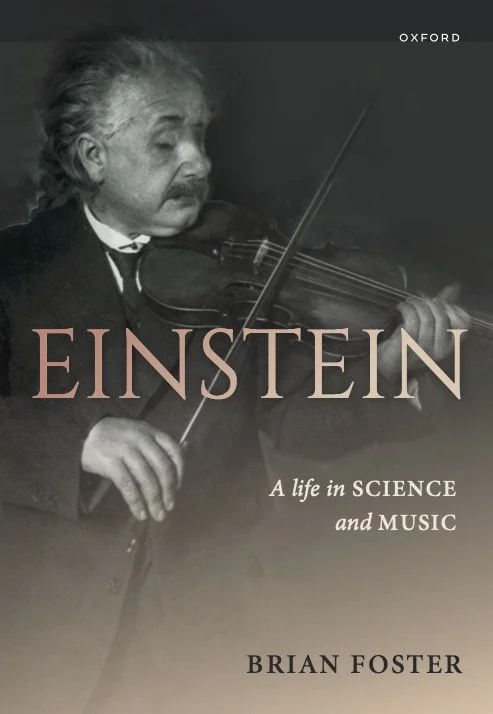
Concert 3 - Einstein - A Life in Science and Music
May
3
2:00 PM14:00

Concert 3 - Einstein - A Life in Science and Music

Johann Sebastian Bach - Chaconne from Partita in D minor, BWV 1004

Ernest Bloch - Three Nocturnes for Piano Trio B57

Bohuslav Martinu - Five Madrigal Stanzas, H297 (Selection)

Wolfgang Amadeus Mozart - String Quintet in G minor, K516 (1st mov.)

Brian Foster - lecturer
Jack Liebeck - violin
Joshua Fisher - violin
Ben Roskams - viola
Sarah-Jane Bradley-- viola
Thomas Carroll - cello
Geirþrúður Anna Guðmundsdóttir - cello
Katya Apekisheva - piano

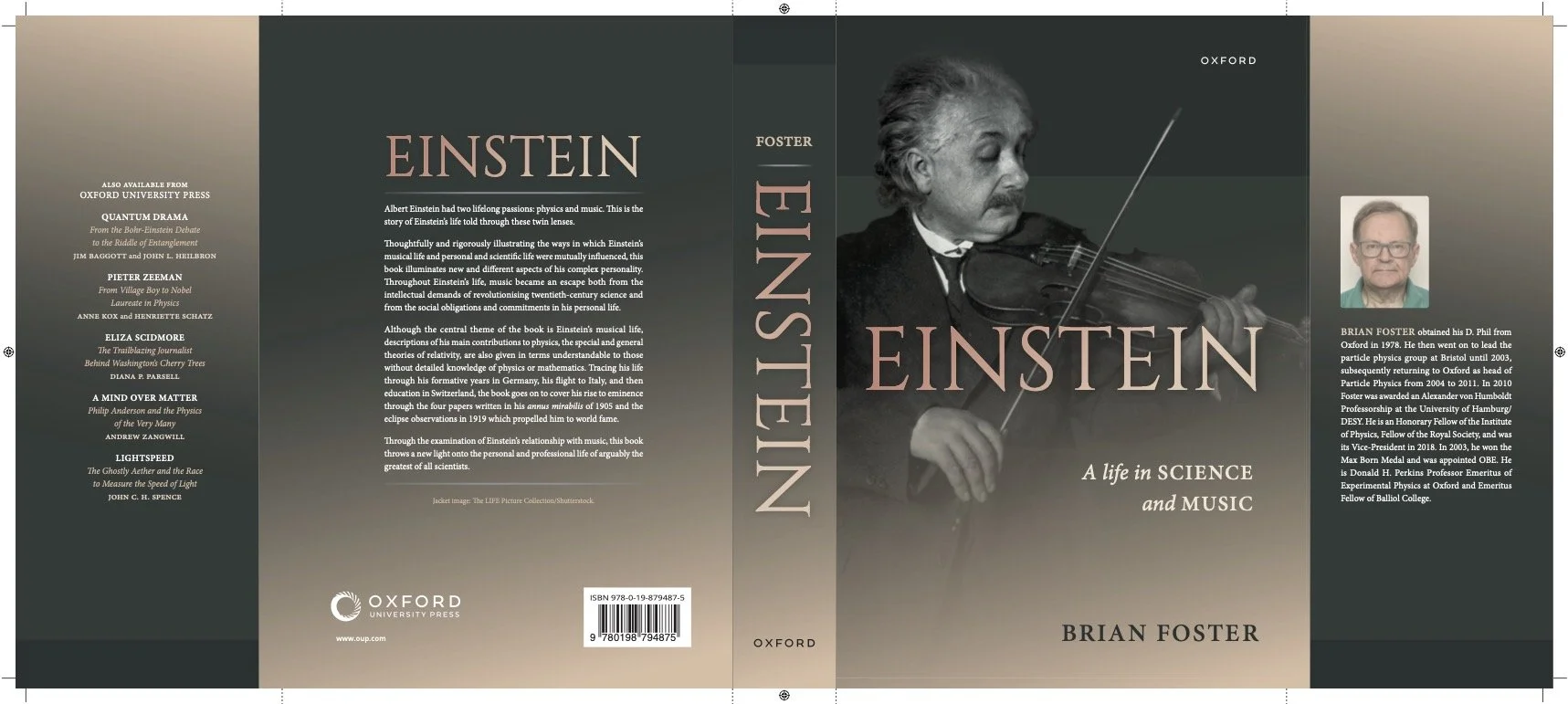
This lecture-concert is the book launch for “Einstein - A Life in Science and Music”, published by Oxford University Press in February. The lecture outlines Einstein’s passion for music, illustrated by pieces he played and composers with whom he had a particular connection.

View Event →
“The Music of Many: Rhythm and Synchrony in Animal Collectives” - Prof. Iain Couzin, FRS, Max Planck Institute of Animal Behaviour
May
3
5:15 PM17:15

“The Music of Many: Rhythm and Synchrony in Animal Collectives” - Prof. Iain Couzin, FRS, Max Planck Institute of Animal Behaviour

From flocks of birds sweeping across the sky to schools of fish turning as one, animal groups often move with a precision that feels almost musical. Yet there is no leader, no score, and no conductor. This talk explores how rhythm and synchrony emerge from simple interactions between individuals. Like musicians in an ensemble, animals continuously adjust their timing and movement in response to those around them, producing coordinated patterns that no single individual controls. Drawing on research across insects, fish, birds, and humans, I will show how these shared rhythms allow groups to make decisions, transmit information, and respond rapidly to change. By revealing the hidden “music” that binds many individuals into a collective whole, this work highlights why synchrony is one of nature’s most powerful organising principles.

View Event →
Concert 4 - Nicholas Daniel and friends
May
3
7:30 PM19:30

Concert 4 - Nicholas Daniel and friends

Dorothy Howell - Air, Variations and Finale for Oboe, Violin and Piano

Robin Holloway - Quintet for Cor Anglais and String Quartet, Op. 135

Pavel Haas - Suite for Oboe and Piano, Op. 14

Interval

Eleanor Alberga - “Fleeting” for Oboe and Piano

Wolfgang Amadeus Mozart - “Grand Partita”, K361 (arr. Schwenke)

Nicholas Daniel - oboe
Jack Liebeck - violin
Joshua Fisher - violin
Ben Roskams - viola
Sarah-Jane Bradley-- viola
Thomas Carroll - cello
Geirþrúður Anna Guðmundsdóttir - cello
Katya Apekisheva - piano
Olga Zado - piano

Nicholas Daniel is an old friend of the Festival and makes a welcome return, along with another old friend, the Mozart “Gran Partita” arranged for oboe, strings and piano. The rest of his progamme is an eclectic mix of contemporary pieces and those from the 20th century.

View Event →
Concert 6 - Barber & Brahms
May
4
2:00 PM14:00

Concert 6 - Barber & Brahms

Samuel Barber - Adagio for string quartet, Op. 11

Johannes Brahms - String Sextet No. 1 in B-flat major, Op. 18

Jack Liebeck - violin
Joshua Fisher - violin
Ben Roskams - viola
Sarah-Jane Bradley- viola
Thomas Carroll - cello
Geirþrúður Anna Guðmundsdóttir - cello
Olga Zado - piano

Barber’s famous and beloved Adagio is paired with the Brahms’ sextet. Both of works of youth. The Adagio is part of a string quartet but has gained another independent life in an arrangement for string orchestra which is among the most popular in the orchestral repertoire. It was written when Barber was 24 years old. In contrast, Brahms was a hoary 27 years old when he composed the Sextet.

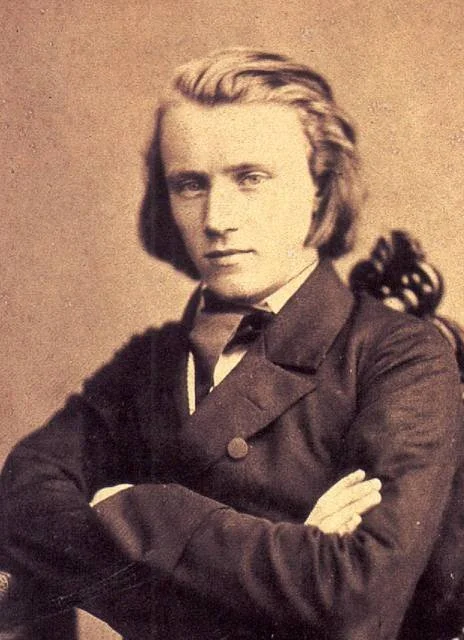
A young Johannes Brahms

View Event →
How antibodies fight infection from inside our cells - Professor Leo James, FRS (University of Cambridge)
May
4
4:00 PM16:00

How antibodies fight infection from inside our cells - Professor Leo James, FRS (University of Cambridge)

Antibodies were once thought to block infection simply by intercepting pathogens outside our cells. Unexpected discoveries have now revealed that antibodies have a second, secret life inside cells. Here, antibodies protect us from viruses, bacteria and pathogenic proteins by targeting them for destruction in the cells own recycling machinery. In my talk I will discuss our recent work uncovering how this remarkable system of intracellular antibody immunity works and how we are exploiting our understanding to design new therapeutics for the treatment of diverse diseases from infection to neurodegeneration.

View Event →
Concert 7 - Wagner’s Ring for people who can’t be bothered to sit through it - Rainer Hersch
May
4
6:00 PM18:00

Concert 7 - Wagner’s Ring for people who can’t be bothered to sit through it - Rainer Hersch

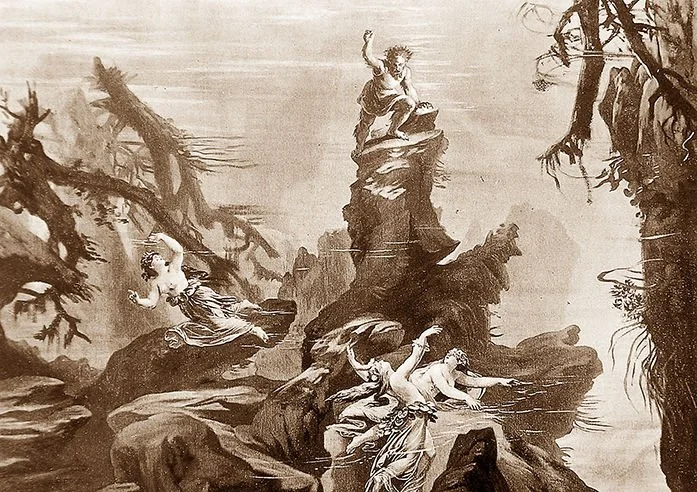
The Ring Cycle by Richard Wagner is arguably the greatest artistic achievement by a single person working alone but, apart from a few vague plot lines mostly mistaken from Lord of the Rings, the average punter has no idea what it’s about.  Wagner’s ground-breaking score is an acknowledged masterpiece but, apart from the Ride of the Valkyries (No. 38 in the Classic FM Hall of Fame), most people wouldn’t recognise it. 

Well, at over 15 hours, taken over four days, who’s got the time, right?

Rainer Hersch is on a mission to change that.  With the aid of no more than a piano, a funny slide show and his own wit (see below), he is going to boil the whole wobbling edifice of Richard Wagner’s TotalArtWork down to just 60 minutes – boom,  finished, now get on with your day.  And whether you are a died-in-the-wool Wagnerian or a total first timer, we guarantee you will get the jokes.

What can you expect to learn from WAGNER’S RING ‘FPWCBBTSTI’?  Is Richard’s Donner the same as the one from the Marvel series or is he in fact companion to Dasher, Dancer, Blitzen, and Rudolph?  What exactly is a Leitmotiv and how does it differ from a Heavy motif?  Is Götterdämmerung actually German for ‘God-dammit!’  …this and more.  But mainly just enough to bluff your way round your next group of opera aficionados who have previously regarded you as some sort of village idiot for never having been to the Wagner shrine in Beirut… BEYREUTH!


PRAISE FOR RAINER HERSCH

 “Rainer Hersch is a wickedly funny man, who needs nothing more than a piano and his own wit to leave you desperate for more” Edinburgh Evening News

“Better than Borge” London Time Out

“At last, a musical comedian with a difference, he is actually funny” Daily Telegraph
 

View Event →